Wind-driven rain goes sideways, and the eaves are where it gets in
The eaves do two jobs: they close the roof off at the edge and they let the roof space breathe. When they rot, both stop working, and the second failure quietly shortens the life of the roof above.
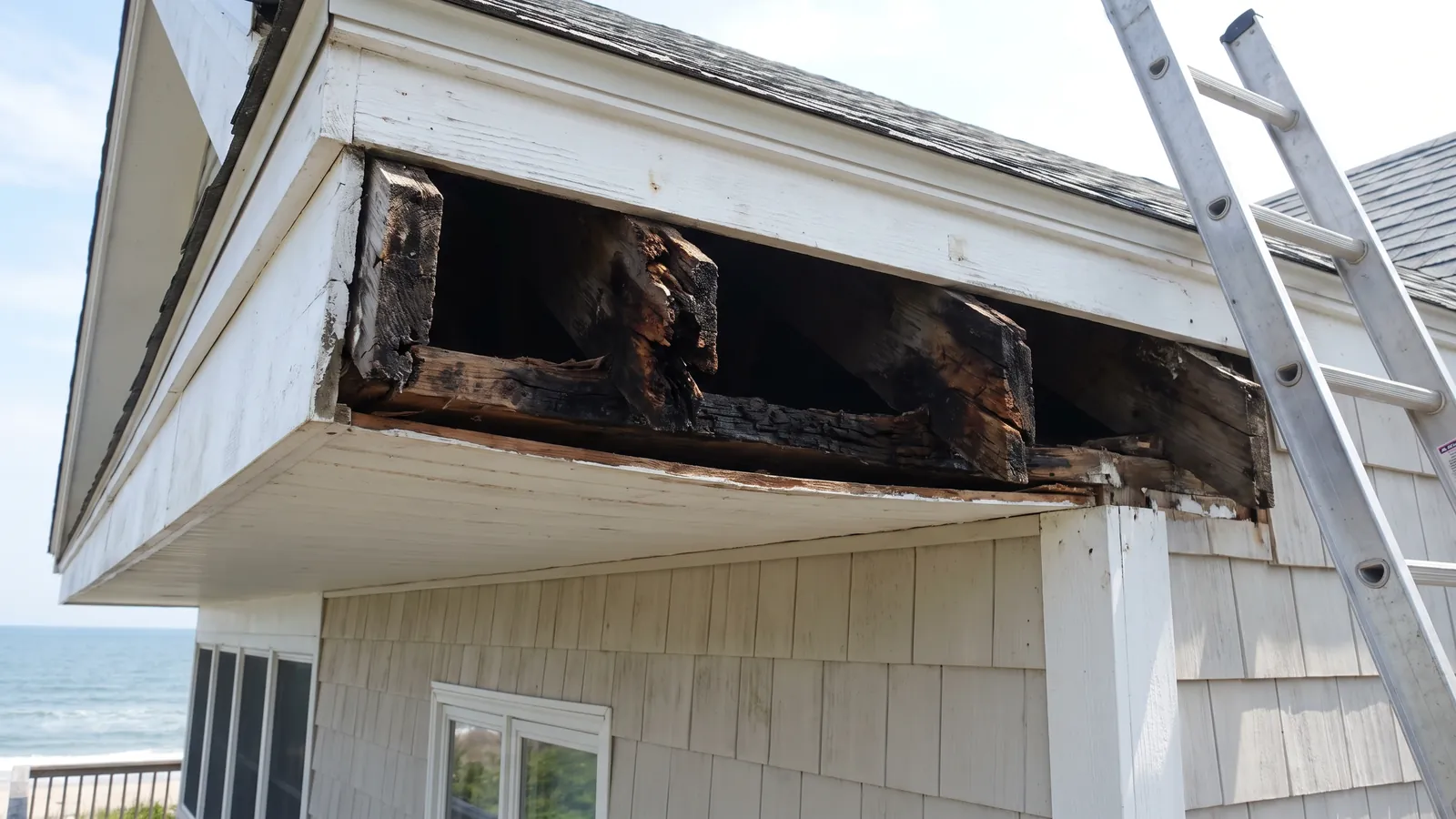
What rots and why. On this coast the driver is wind-driven rain, which does not fall so much as travel horizontally and goes straight into soffit vents and behind fascia boards. The water then sits in the eaves cavity against the rafter tails — the exposed ends of the roof structure — and rots them from the end in. The fascia board is fixed to those tails, so when they soften the fascia loses its hold, and the first symptom most people notice is guttering pulling away from the house. By that point the problem has usually been going for a while.
The other common cause is upstream. A blocked or overflowing gutter runs water down the back of the fascia every time it rains, which does the same job more slowly. And a leak at the roof edge — failed drip edge, lifted starter course — puts water into the same place from above.
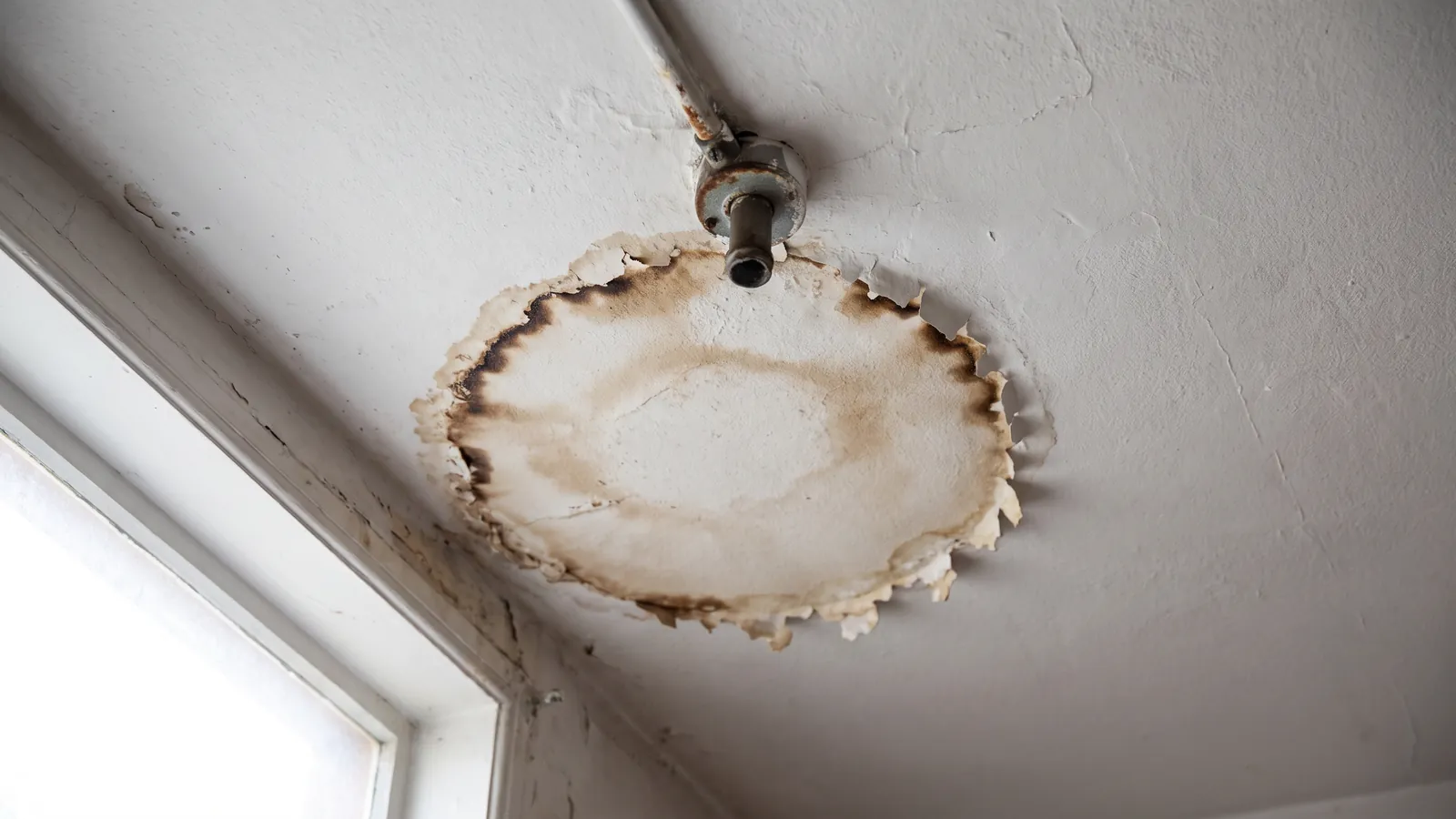
The ventilation half of it. Soffit vents are the intake for a roof space that exhausts at the ridge. Block them, cover them with insulation inside, or replace a vented soffit with a solid one, and the ridge vent has nothing to draw from. The roof space then runs hot and humid, which in a Mississippi summer cooks shingles from underneath and takes years off a roof. It also raises the condensation risk that produces leak-like ceiling staining with no leak at all. When we replace soffit, net free vent area is part of the specification rather than an afterthought.
What goes back. Vented aluminium or vinyl soffit is the sensible default here — it does not rot, it handles the salt, and the vent area is predictable. Aluminium fascia cover over sound timber protects the board while keeping a clean line. Where rafter tails have gone, they get sistered or cut back and spliced, which is structural work and needs doing properly rather than filling. Timber that is painted over while soft is a repair you will do again in two years.
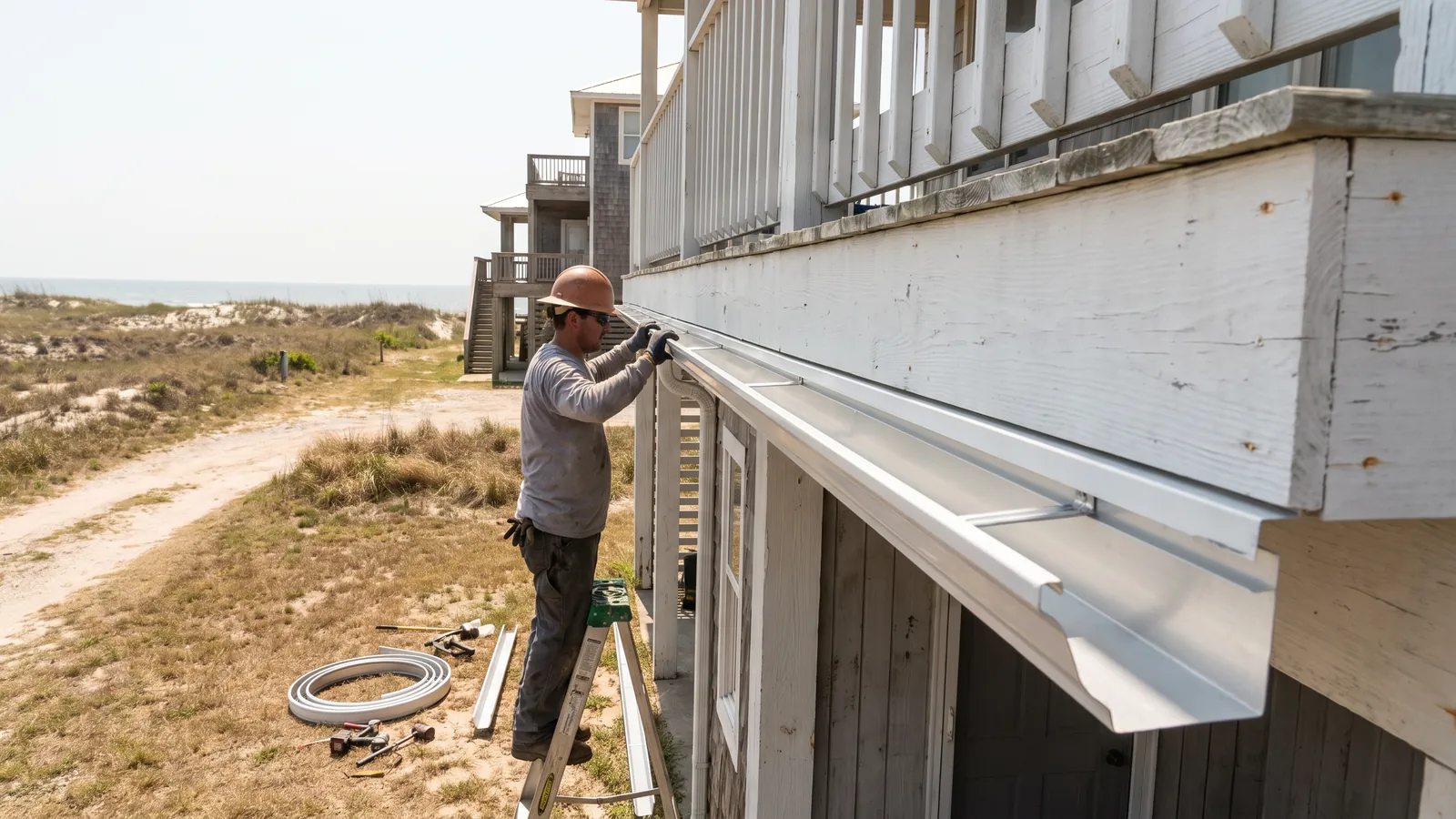
Because the gutter has to come off to do any of this, it is the natural moment to deal with the guttering if it is near the end of its life.
What's included
Rafter tails repaired structurally
Sistered or cut back and spliced where rot has reached the timber, not filled and painted over.
Vent area specified
Soffit intake sized against the ridge exhaust, because blocked intake cooks the roof space and shortens the shingles.
Aluminium or vinyl soffit
Materials that do not rot and handle salt air, with predictable net free vent area.
Cause traced upstream
Overflowing gutters, failed drip edge and lifted starter courses get found, or the new eaves rot the same way.
Fascia protected
Aluminium cover over sound timber, so the board is not exposed to wind-driven rain again.
Done with the guttering
The gutter comes off either way, so replacing it at the same time saves a second visit.
Soffit and fascia repair prices on the Mississippi coast
| Job | Typical price | Notes |
|---|---|---|
| Inspection with photographs | $0 – $195 | Free when the work follows |
| Fascia board replacement, per foot | $18 – $38 | Timber, primed and fitted |
| Aluminium fascia cover, per foot | $12 – $24 | Over sound or new timber |
| Vented aluminium soffit, per foot | $14 – $30 | With specified vent area |
| Rafter tail repair, each | $140 – $320 | Sistered or spliced |
| Average single-storey, eaves to one side | $1,100 – $2,600 | Soffit, fascia and tails as needed |
| Full perimeter, single-storey | $2,800 – $6,200 | By length and extent of rot |
| Gutter replacement at the same time | $1,400 – $2,900 | See gutters |
These are 2026 ranges for Harrison, Hancock and Jackson counties, to give you something to plan around. The real figure comes after someone has been on the roof, with the scope, the permit and the inspections itemised; written estimates hold for 30 days.
Recent work
Questions we get about soffit and fascia repair
My gutter is coming away from the house. Is that a gutter problem?
Usually it is a fascia problem showing itself through the gutter. The hangers screw into the fascia, the fascia is fixed to the rafter tails, and if those have rotted there is nothing solid left to hold. Re-screwing it achieves little. The eaves need opening up and looking at properly.
Why do the eaves rot here when they are under the roof?
Because wind-driven rain on this coast travels sideways rather than falling. It goes straight into soffit vents and behind fascia, then sits in the eaves cavity against the rafter tails. Overflowing gutters and a failed drip edge do the same thing from different directions.
Can you just paint over the soft bits?
You can, and it will look fine for a season or two while the rot continues underneath. Soft timber has lost its structural value and will not hold a fixing. Where the rot has reached the rafter tails, they need sistering or splicing, which is structural work and not something paint addresses.
Does replacing the soffit affect my roof?
It can, significantly, which is why vent area is part of the specification. Soffit vents are the intake for a roof space that exhausts at the ridge. Fit solid soffit, or block the vents, and the ridge vent has nothing to pull from — the roof space then runs hot and humid, which cooks shingles from below and shortens the roof.
Should I use aluminium or wood?
Aluminium or vinyl on this coast, for the simple reason that neither rots and both handle salt air. Timber is appropriate on period properties and where appearance matters, and it then needs maintaining on a schedule rather than when somebody notices. Aluminium fascia cover over sound timber is a good middle course.
How do I know how far the rot has gone?
You generally cannot from the ground, and probing from a ladder only tells you about the board. The eaves have to be opened at a section or two to see the rafter tails. We would rather do that at the inspection and quote accurately than start work on an estimate and revise it from the ladder.