Wind, flood, deductibles, and the order that makes a claim straightforward
A roof claim is decided mostly on evidence gathered in the first few days and on two policy details most people only read afterwards. Both are worth understanding before a storm rather than during one.
Two things to know about your own policy
Your wind and hail deductible is probably not a flat figure. On this coast it is frequently a percentage of the insured value — commonly 1 to 5 per cent — which on a $300,000 home can mean $3,000 to $15,000. That changes whether a claim is worth filing entirely, and a great many people discover it at exactly the wrong moment.
Your roof may settle at actual cash value rather than replacement cost. ACV deducts depreciation for age, so a fifteen-year-old roof may be reimbursed at a fraction of what replacing it costs. Some policies also exclude cosmetic damage, which matters on metal roofs where hail dents without breaching.
Find both in your policy in May. They decide more than anything an adjuster will say.
Wind and flood are different policies
Wind damage sits under your homeowners or windstorm policy. Flood sits under a separate flood policy, usually NFIP. A coastal storm can produce both on the same house, with different adjusters and different claim numbers. Attributing damage to the right one from the start saves weeks of circular correspondence.
On this coast, wind and hail cover is frequently written through the Mississippi Windstorm Underwriting Association, created in 1987 as the insurer of last resort for coastal homeowners who cannot obtain it on the open market. If that is your carrier, the process is MWUA's rather than your homeowners insurer's.
The order that works
- Photograph before anything is touched. Every slope, interior damage, debris, and collateral damage elsewhere — gutters, screens, air conditioning fins — which corroborates the event.
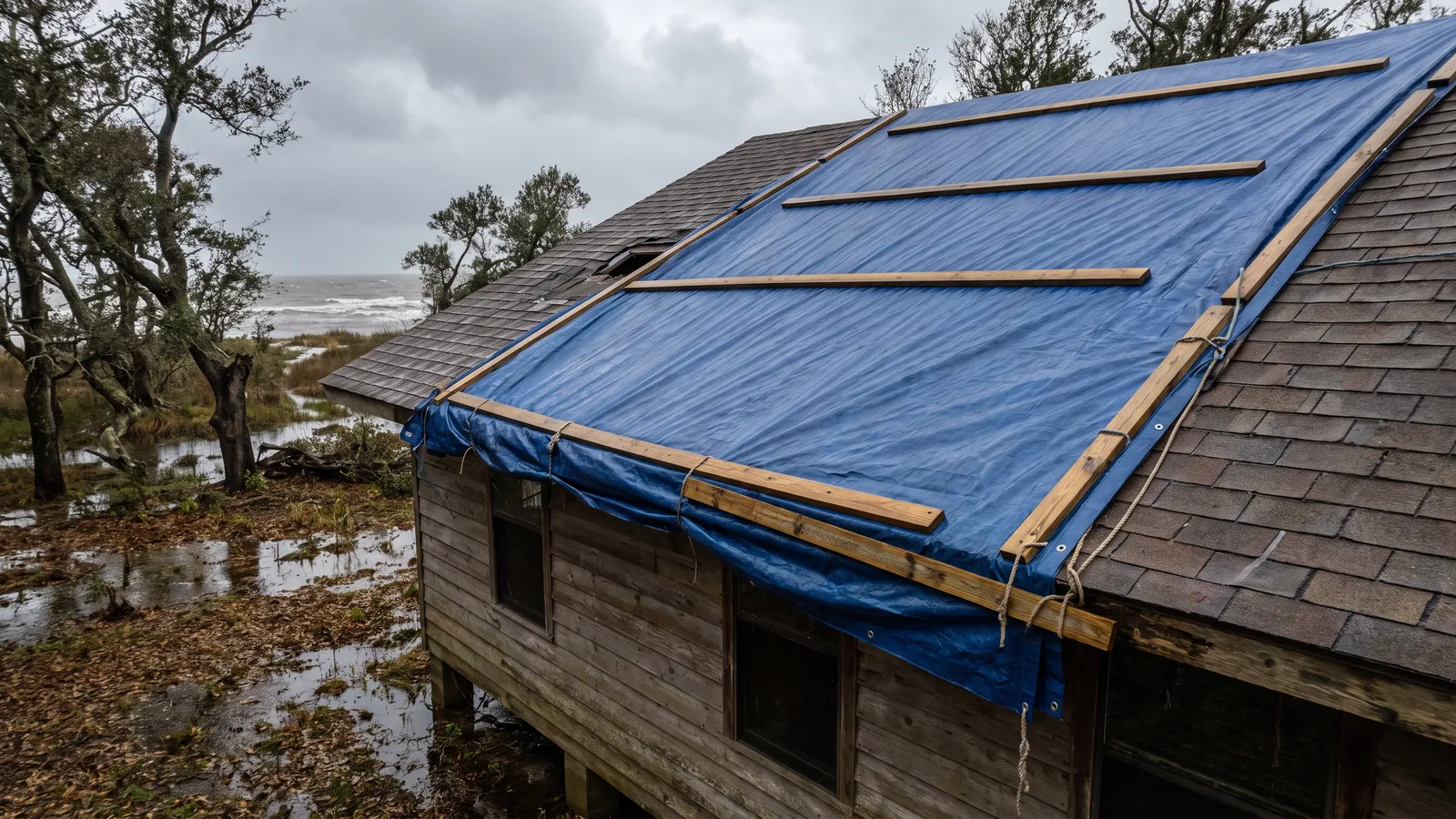
- Tarp it. Mitigation is usually covered and often required by the policy. Keep the invoice.
- Open the claim. Record the date, the storm and the claim number.
- Get an inspection with a written report. Dated, slope by slope, with an itemised scope. This is what an adjuster works from.
- Meet the adjuster on site if you can, with your contractor present.
- Compare their scope against yours. Missing items are normal and are addressed through a supplement rather than an argument.
- Keep every receipt. Tarping, emergency repairs, accommodation.
What makes damage look like wear and tear
Adjusters are looking to separate sudden event damage from gradual deterioration. Delay is what blurs the line: three weeks and two more rain events later, new damage has accumulated and the original event is harder to isolate. Dated photographs tied to a named storm, collateral damage across the property, and a detailed scope are what keep a claim on the right side of that distinction.
If the claim is denied or underpaid
A first response is not the final word. You can request a re-inspection, you can submit a supplement with additional documentation, and you can escalate within the carrier. If you want someone to negotiate on your behalf, that is a public adjuster — a licensed role in Mississippi, and not something a roofing contractor can or should do. The Mississippi Insurance Department takes complaints about carrier conduct.
The thing to refuse
Any offer to cover, waive, absorb or discount your deductible is insurance fraud, and accepting makes you a participant rather than a beneficiary. It is offered routinely across this coast after storms, frequently alongside a contract or assignment of benefits to sign on the spot. Both should end the conversation.
What we do and do not do
We document damage accurately, supply an itemised scope in the form adjusters expect, and will meet your adjuster on site. We do not adjust claims, negotiate on your behalf, inflate scopes, describe damage that is not there, or touch deductibles. Coverage is between you and your carrier.
Common questions
Should I file a claim at all?
Work out the likely repair cost against your deductible first, and check whether that deductible is a percentage rather than a flat figure. On a coastal policy it frequently is, which can put it in the thousands. One slope of damage may fall below it; damage across the roof usually does not.
What is the difference between ACV and replacement cost?
Replacement cost pays what it costs to replace the roof today. Actual cash value deducts depreciation for age, so an older roof is reimbursed at a fraction of replacement. Many coastal policies settle roofs over a certain age at ACV, and it is worth knowing which yours does before you need to.
My claim was denied as wear and tear. Is that final?
No. You can request a re-inspection, submit a supplement with further documentation, and escalate within the carrier. What helps is dated photographs tied to a specific named storm, collateral damage elsewhere on the property, and a detailed scope. If you want representation, that is a licensed public adjuster.
Can my roofer handle the claim for me?
No, and an offer to do so should give you pause. Representing you in a claim is public adjusting, a licensed activity in Mississippi, and not what a roofing contractor is. A contractor can document, provide a scope and meet the adjuster. Anything beyond that is somebody operating outside their lane.
What if the adjuster's scope misses things?
That is common and routine rather than adversarial. The mechanism is a supplement: additional documentation for items the original scope omitted, submitted for review. A good written report from the start reduces how often this is needed.
Related: Insurance inspections · Storm damage · Hurricane checklist · Paying for the work