Sized for the rain that actually falls here, not the catalogue average
Guttering is the least interesting part of a roof and one of the more consequential, because what it fails to carry away ends up against the fascia, down the wall, or in the ground beside the foundation.
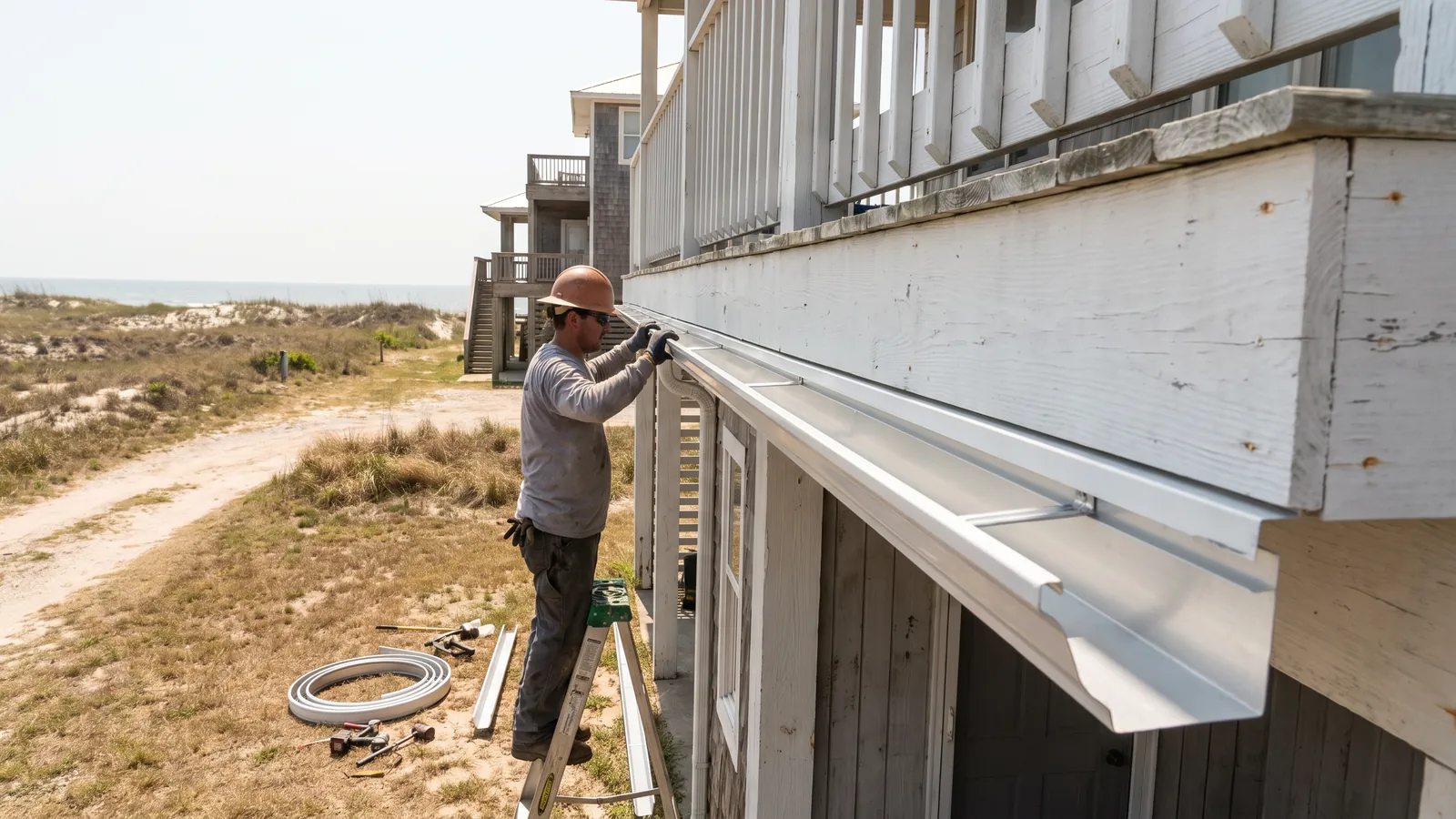
Size matters more here than most places. The standard five-inch K-style gutter with two-by-three downpipes is specified for average rainfall. The Mississippi coast does not get average rainfall; it gets intense convective downpours and tropical systems that deliver more in an hour than some regions see in a month. A five-inch gutter on a large roof plane overshoots in exactly those events, which is when the overflow does damage. Six-inch gutters with three-by-four downpipes carry substantially more and are what we fit on anything with a significant roof area — the cost difference is modest and the performance difference shows up precisely when it matters.
Seamless, and why. Sectional guttering joins every ten feet, and every joint is a future leak as the material expands and contracts. Seamless gutter is rolled on site from a coil to the exact length of the run, so the only joints are at corners and outlets. On a coast with this temperature range that is a meaningful difference in service life.
The fixings are the coastal problem. Aluminium gutter near salt air is fine; the hidden hangers, screws and any steel component are not. Mismatched metals in contact in a salt environment corrode galvanically, which is why you see gutters that look perfect hanging off fascia on rusted screws. Stainless or properly coated fixings, at closer centres than inland practice, are what keeps a gutter on the building through a storm.
Where the water goes. A downpipe that discharges at the base of the wall has moved the problem four feet. On this coast, with the soils here, water against a foundation is worth avoiding. Extensions, splash blocks or a connection to a drain all work; what does not work is a downpipe into a soakaway that was never sized and now backs up.
Guards and screens. Under live oaks — which is most of this coast — some form of screening earns its keep, because oak litter is relentless and a blocked gutter in a downpour is worse than no gutter. No guard is maintenance-free, whatever the brochure says. Fine mesh handles oak debris best, and it still wants checking once a year.
What's included
Six-inch where the roof area warrants it
With three-by-four downpipes, because five-inch gutters overshoot in exactly the storms that cause damage.
Seamless, rolled on site
Joints only at corners and outlets, rather than every ten feet as with sectional guttering.
Coastal fixings
Stainless or properly coated hangers and screws at closer centres, because salt air destroys mismatched metals.
Fall set properly
Enough to clear but not so much that it looks wrong against the fascia, with outlets positioned for the actual roof planes.
Discharge taken away from the wall
Extensions, splash blocks or a drain connection, rather than dumping at the base of the foundation.
Fascia checked before hanging
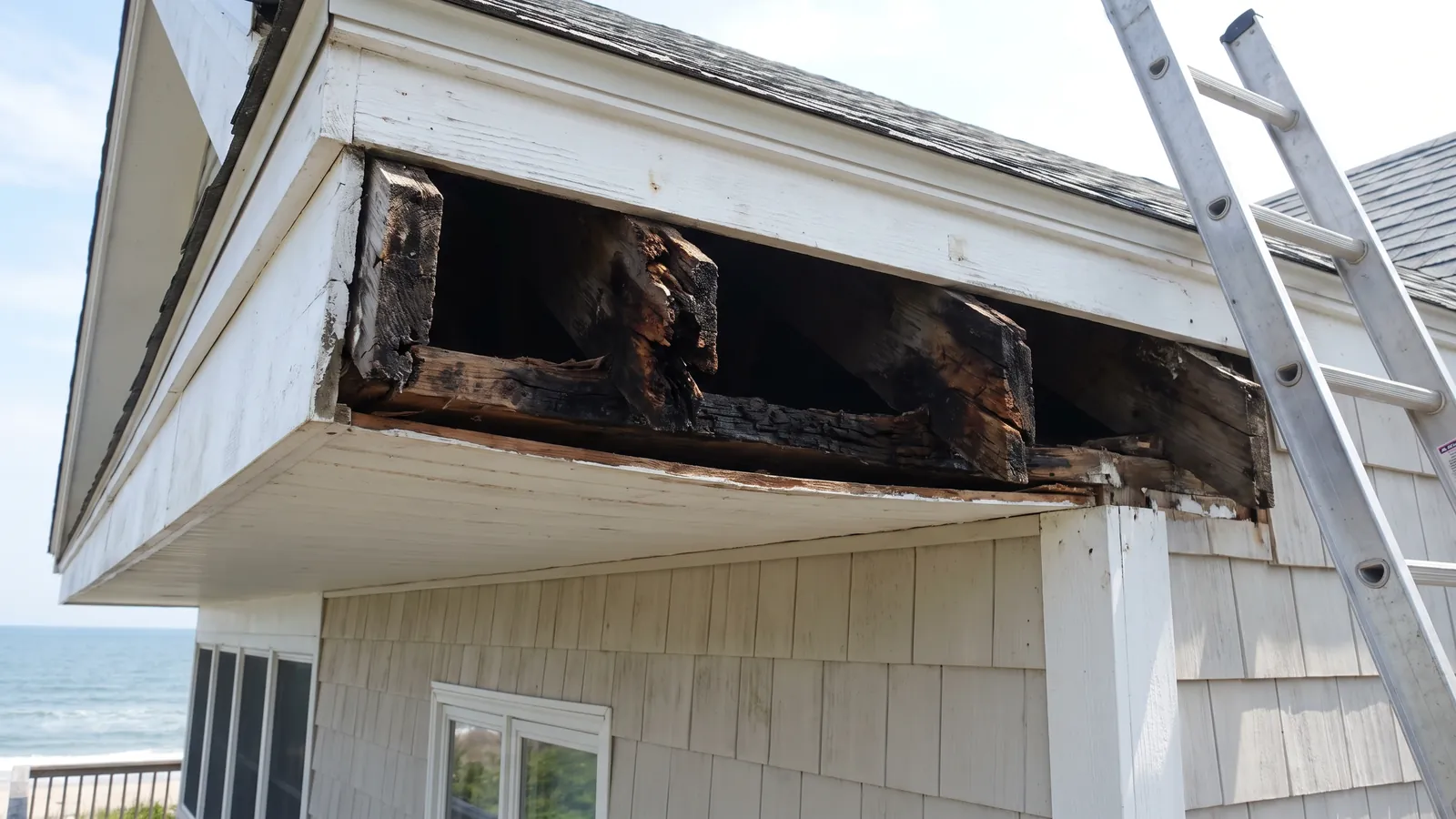
There is no point hanging new guttering on rotted board; see soffit and fascia.
Gutter replacement prices on the Mississippi coast
| Job | Typical price | Notes |
|---|---|---|
| Seamless aluminium, 5 inch, per foot | $9 – $15 | Fitted, with hangers and outlets |
| Seamless aluminium, 6 inch, per foot | $12 – $20 | Recommended on larger roof planes |
| Downpipes, 2x3, each | $95 – $185 | Including brackets and shoe |
| Downpipes, 3x4, each | $130 – $245 | Recommended with 6 inch gutter |
| Average single-storey house, complete | $1,400 – $2,900 | Seamless, with downpipes |
| Gutter guard or mesh, per foot | $6 – $14 | Fine mesh for oak litter |
| Fascia repair before hanging | $18 – $38 per foot | Where the board has gone |
| Clean and re-secure existing | $220 – $520 | Where the guttering is still sound |
These are 2026 ranges for Harrison, Hancock and Jackson counties, to give you something to plan around. The real figure comes after someone has been on the roof, with the scope, the permit and the inspections itemised; written estimates hold for 30 days.
Recent work

Questions we get about gutter replacement
Do I need six-inch gutters?
On a large roof plane here, yes. Five-inch gutters are sized for average rainfall and this coast gets intense tropical downpours that overshoot them — and overshooting happens exactly during the storms when water against the wall does the most damage. On a small roof with short runs, five-inch is fine.
Are gutter guards worth it?
Under live oaks, which is most of this coast, generally yes — oak litter is constant and fine enough to pack a gutter solid. Fine mesh handles it best. What no guard does is eliminate maintenance; anything claiming to be maintenance-free will still need checking annually, and brochures that say otherwise are selling.
How long do aluminium gutters last on the coast?
The aluminium itself lasts a long time; the fixings decide the outcome. With stainless or properly coated hangers and screws, twenty years or more is reasonable. With ordinary steel fixings in salt air you can see failures inside five, with the gutter still perfect and hanging off the building.
My gutter is pulling away from the house. Why?
Usually the fascia behind it has rotted and no longer holds the fixings, which on this coast comes from wind-driven rain getting behind the board. Re-screwing into soft timber is a short-term measure at best. The fascia needs sorting before new guttering goes up, or it will pull away again.
Can you just repair my existing gutters?
Often, yes. Re-securing hangers, resealing corner joints and clearing blockages is a reasonable job on guttering that is otherwise sound. Where the sections are sagging between hangers, the joints have opened along the run, or it is five-inch on a roof that needs six, replacement is the better spend.
Does the downpipe need to go further than the wall?
Yes. A downpipe discharging at the base of the wall has relocated the problem by four feet. Extensions, splash blocks or a proper drain connection move it clear of the foundation, which with the soils here is worth doing. It costs very little at the time of installation.