Water is coming in now, and everything else can wait until it is not
An emergency roof call has one job: stop the water. Not quote the replacement, not discuss shingle colours, not open a claim. Get it covered, make it safe, and have the rest of the conversation in daylight.
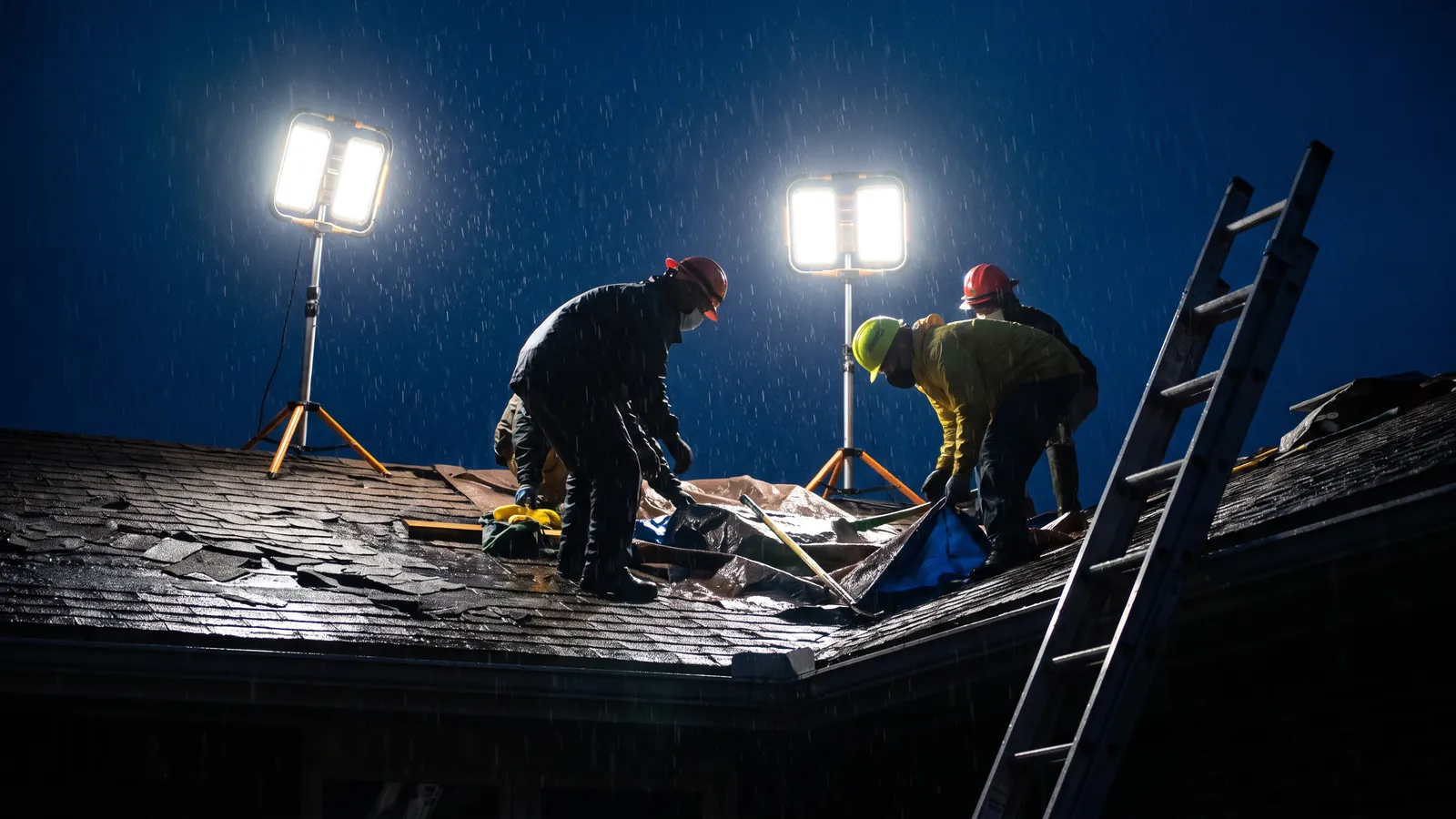
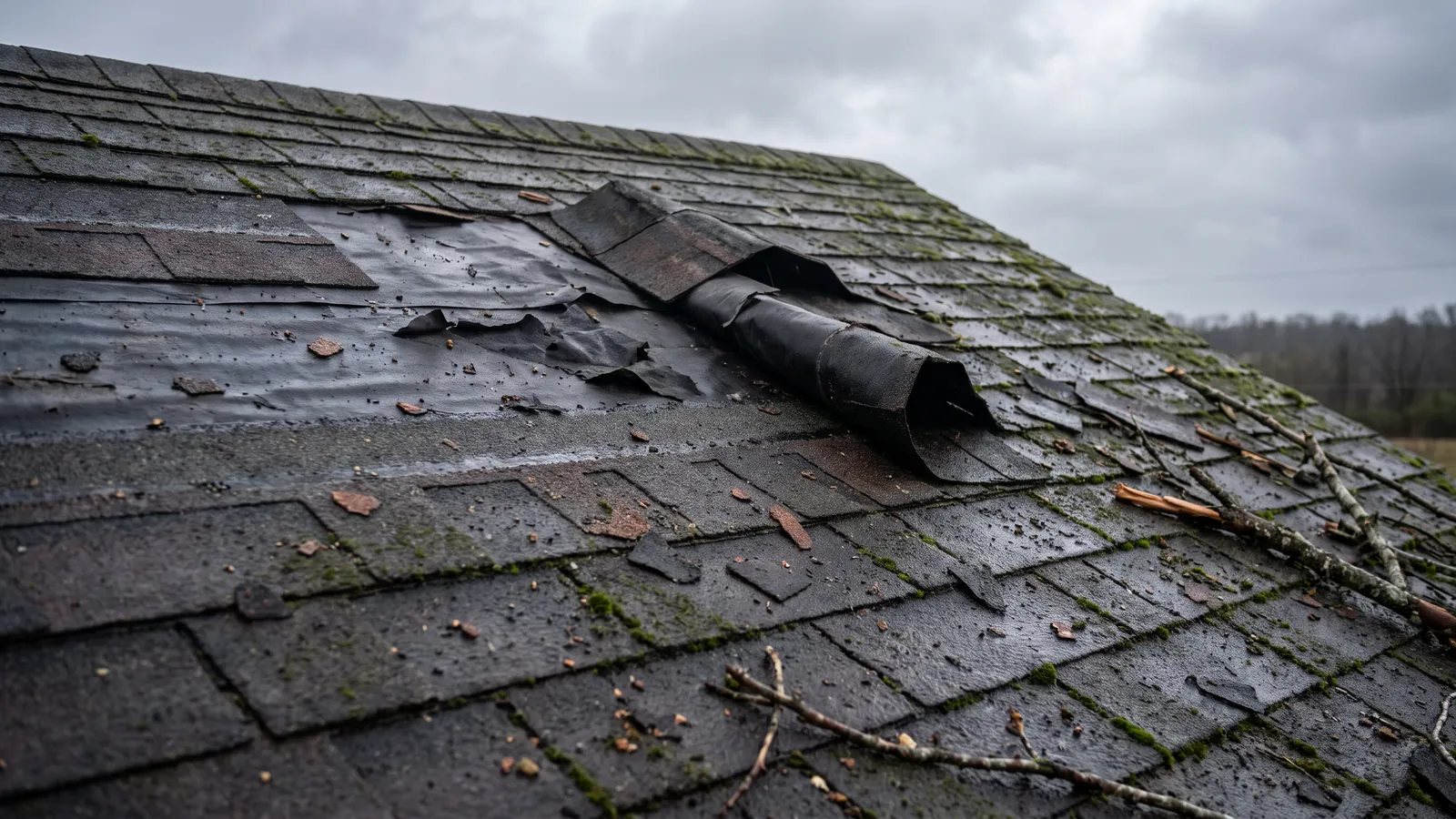
What counts as an emergency is simple enough: water actively entering the building, decking exposed to the sky, or something structural that could come down. Everything else — a stain that is not growing, a shingle you can see is missing, a gutter hanging off — is urgent rather than emergency, and booking it properly in the morning costs you less and gets better work.
What to do while you wait. Move what you can out from under it. Put a bucket down, and if the ceiling is bulging with trapped water, pierce it deliberately at the lowest point with a screwdriver and catch it — that sounds alarming and it is far better than the whole sheet coming down at once. Turn off power to any circuit near the water. Photograph everything, because it is evidence and because it will be dry and less convincing tomorrow. Do not go onto a wet roof in the dark; more people are hurt doing that than by the leak.
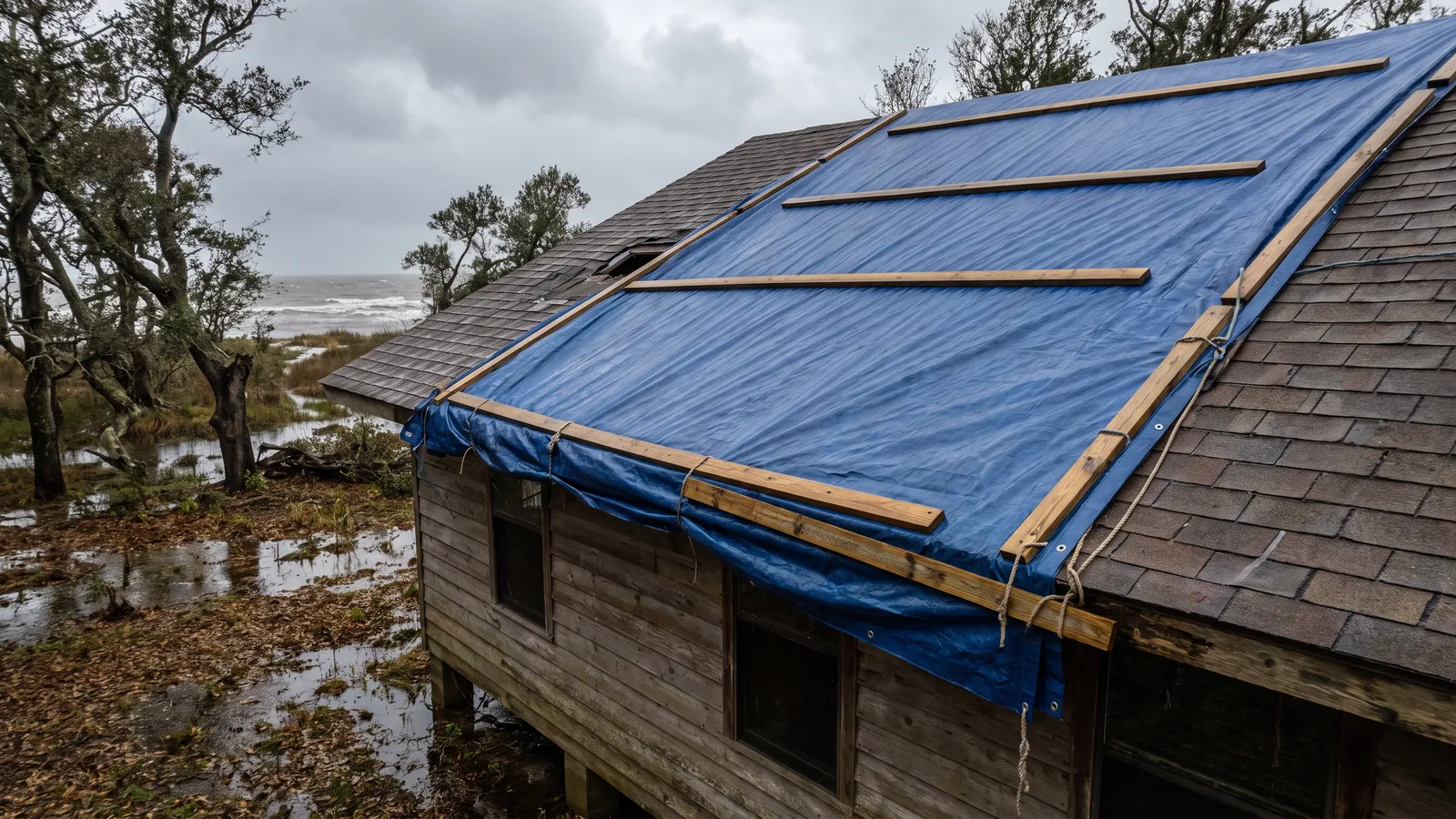
What happens when the truck arrives. Safety first — the roof is checked for soft spots and anything structural before anyone walks it, and in high wind or lightning nobody goes up at all, because a tarp that kills somebody is not a repair. Then the water gets stopped, which at night and in rain almost always means a tarp battened down over the affected slope rather than an attempted permanent fix. Shingle work needs dry conditions and daylight to be done properly, and anything else is a temporary repair being sold as a permanent one.
Then it gets documented and a daylight visit gets booked. You are told what the tarp costs and what the likely repair costs before either happens, and the two are separate figures — never a single number that leaves you unsure what you agreed to.
After a named storm, be realistic. When a system has gone through the whole coast, every roofer from Waveland to Pascagoula is booked and the honest answer about timing may be days rather than hours. We will tell you that plainly and prioritise by severity — water in a living space ahead of water in a garage. What we will not do is promise an hour and arrive on Thursday.
What's included
Answered day and night
A person takes the call, establishes what is actually happening, and says honestly whether this needs a truck tonight or at first light.
Safety assessed before anyone climbs
Soft decking, structural damage, wind and lightning all stop the job. A tarp is not worth an injury.
Water stopped first
Tarping and temporary cover over the affected slope, so the decking stops absorbing while the real repair is arranged.
Two separate figures
The emergency call-out and the eventual repair are quoted separately, so you always know what you have agreed to.
Documented for the claim
Photographed before and after the tarp goes on, with the date recorded, whether or not you end up claiming.
Honest about queues
After a widespread storm the whole coast is booked. You get a real timescale and a severity-based priority, not a promise.
Emergency roof repair prices on the Mississippi coast
| Job | Typical price | Notes |
|---|---|---|
| Emergency call-out, daytime | $180 – $340 | Quoted before dispatch; covers the trip |
| Emergency call-out, night or weekend | $290 – $520 | Stated on the phone before anyone sets off |
| Emergency tarp, small area | $380 – $620 | Up to roughly 300 square feet, battened |
| Emergency tarp, large or multiple slopes | $680 – $1,500 | Larger coverage or awkward access |
| Temporary patch in dry conditions | $340 – $780 | Where a proper repair is possible on the night |
| Interior water containment | $120 – $260 | Ceiling relieved and contained to limit damage |
| Return visit, permanent repair | From $480 | Quoted on the follow-up; see repair |
| Post-storm inspection and report | $0 – $195 | Free inspection; written report priced separately |
These are 2026 ranges for Harrison, Hancock and Jackson counties, to give you something to plan around. The real figure comes after someone has been on the roof, with the scope, the permit and the inspections itemised; written estimates hold for 30 days.
Recent work
Questions we get about emergency roof repair
My ceiling is bulging with water. What do I do right now?
Put a bucket underneath and pierce it deliberately at the lowest point of the bulge with a screwdriver to let the water out in a controlled way. It feels wrong and it is much better than several gallons bringing the whole sheet down at once. Keep clear of electrics and turn off any circuit near the water.
Can you come out in the middle of a storm?
We can take the call and we will talk you through limiting the damage, but nobody goes onto a roof in high wind or lightning. It is not caution for its own sake — a tarp fitted in a gale does not stay on and the risk is serious. As soon as it is safe to climb, you are at the front of the queue.
Will a tarp actually stop the water?
A properly battened tarp, yes, and it will hold for weeks if it has been fitted rather than draped. One held down with bricks and hope will not survive the next gust. The difference is timber battens screwed through the tarp into the deck, with the edges wrapped so wind cannot get underneath.
How much does an emergency call cost?
The call-out is $180 to $340 in daytime and $290 to $520 at night or at a weekend, and you are told which applies before anybody is dispatched. Tarping is separate and depends on the area. The eventual repair is a third figure, quoted in daylight.
It is leaking but only a little. Should I wait until morning?
Usually yes, and we will say so rather than charge you a night rate. Contain it, photograph it, and book the morning. The exceptions are water near electrics, a ceiling holding water, or decking open to the sky with more rain forecast — those are worth the night call.
Do I need to be home?
For the tarp, ideally yes, so somebody can authorise the work and see what was found. For the follow-up inspection it helps because the attic usually needs to be accessed. If you are away we can work with a neighbour or an agent, provided somebody can approve the figure.