Walked and photographed, not surveyed from the lawn with binoculars
An inspection is worth exactly as much as the access behind it. A report written from the ground, or from a drone that cannot lift a shingle tab, tells you what is visible and nothing about what is loose.
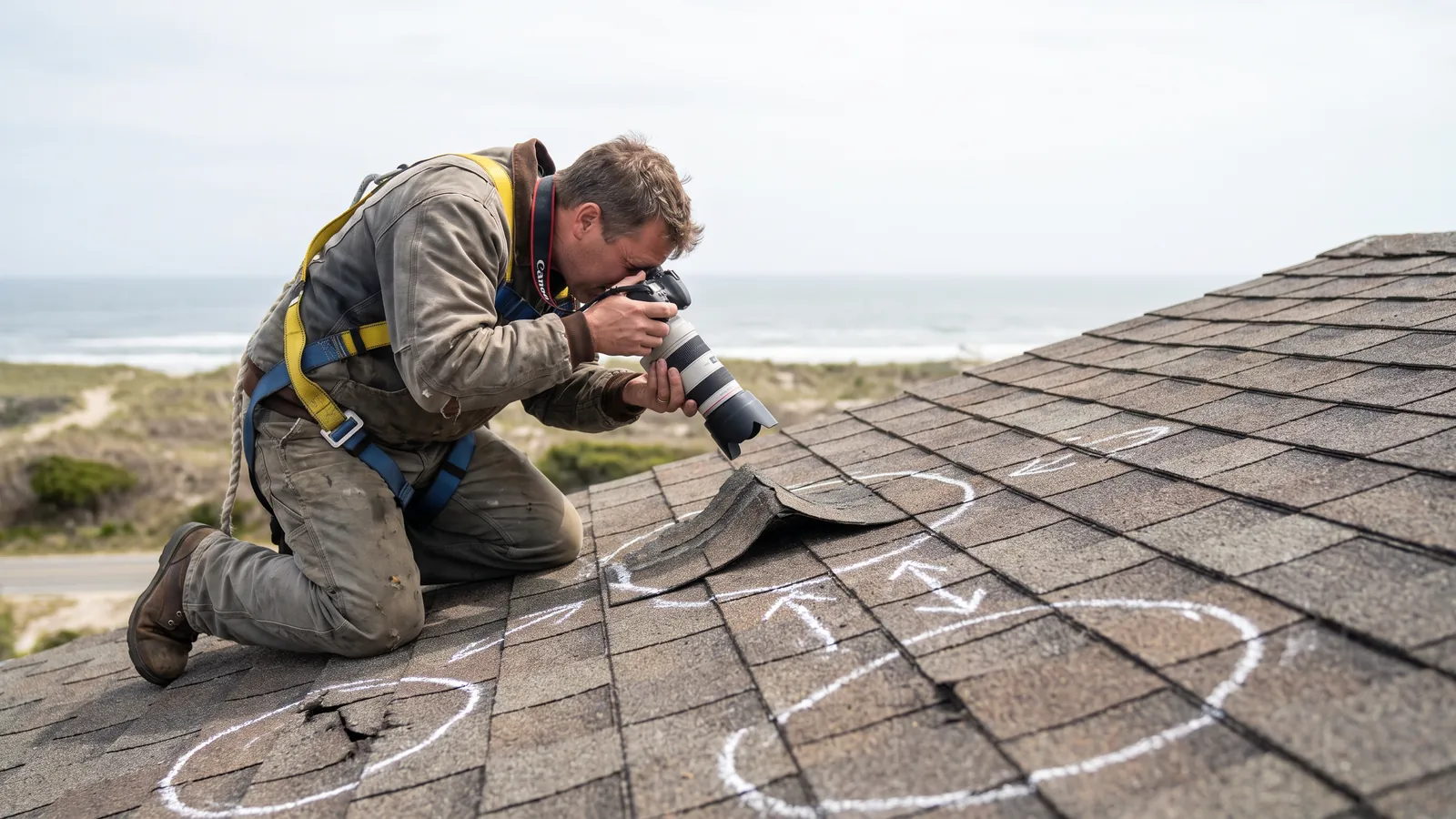
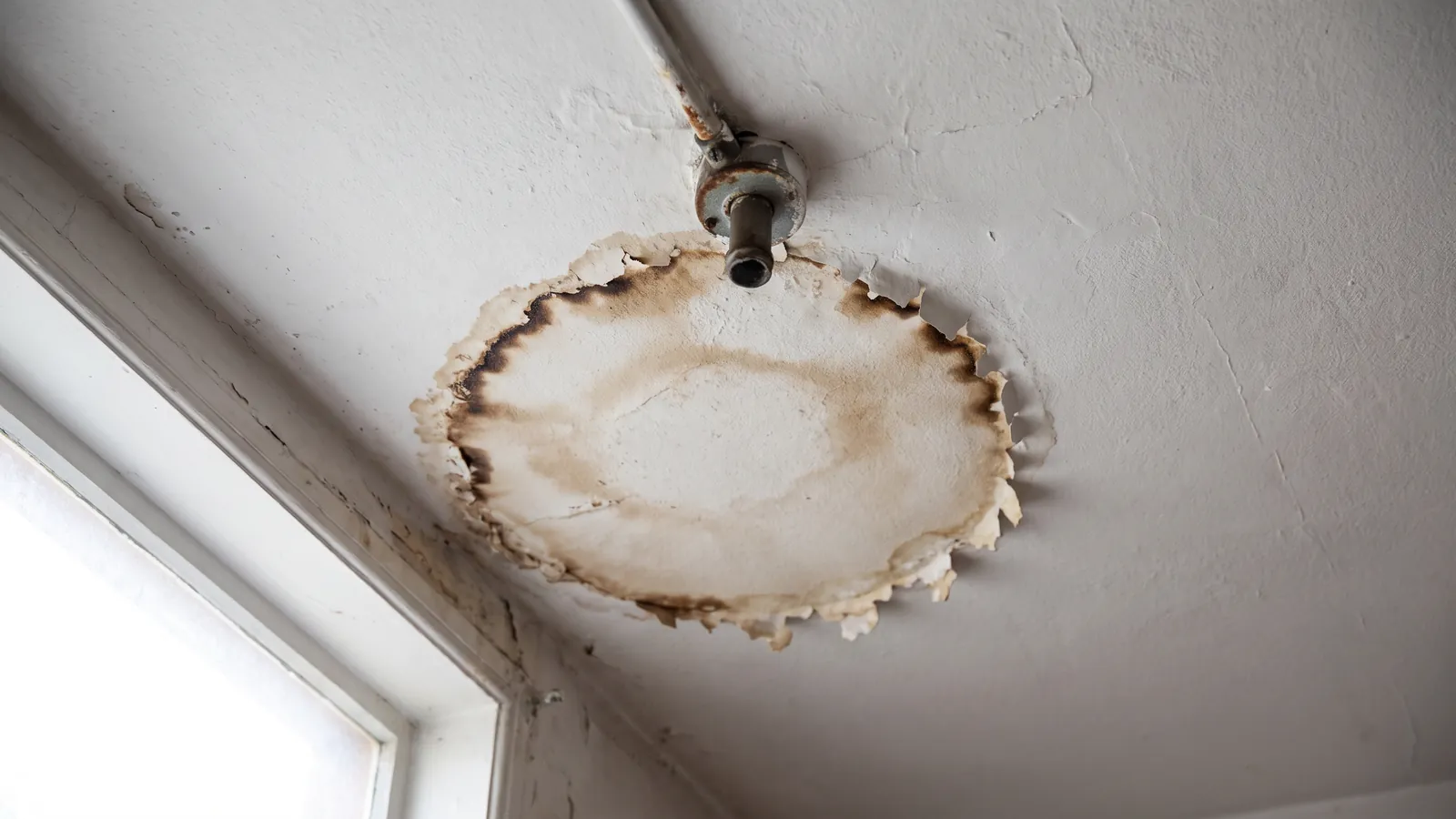
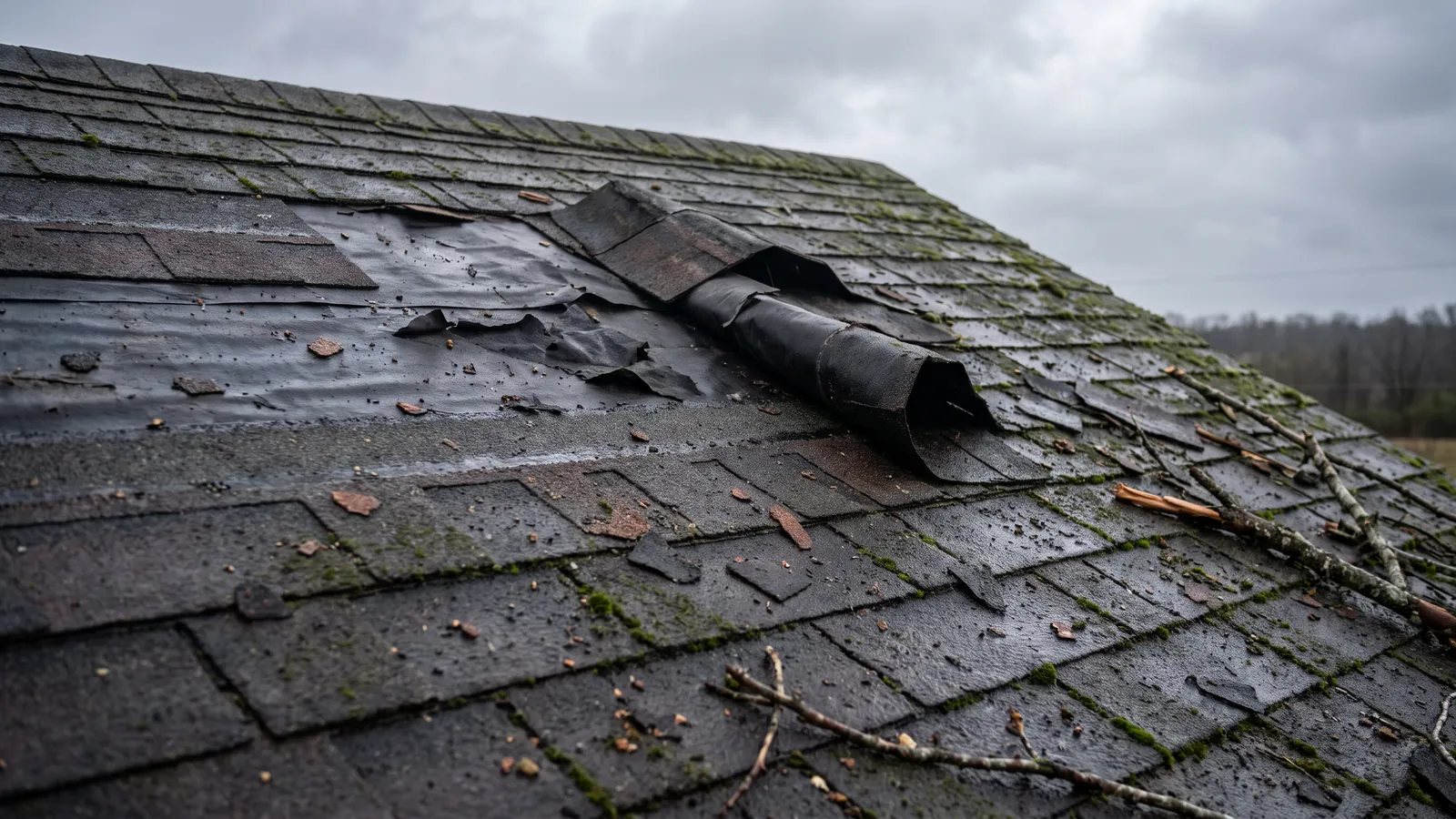
What gets looked at. Every slope, walked where the pitch and condition allow it. The covering — granule loss, curling, cracking, lifted tabs, missing pieces, and on metal the fastener lines and seams. The penetrations: vent boots, flashing at walls and chimneys, skylights, and anything else going through, which is where most leaks originate. The valleys, which carry everything two slopes shed. The edges — drip edge, rake and ridge, where uplift starts. The gutters for granule accumulation, which tells you how far through its life a shingle roof is. And then the attic from underneath, which is where staining, soft decking, daylight through the deck and ventilation problems actually show.
The part most inspections skip. Lifting tabs. After any wind event there is usually a zone of shingles whose self-seal strips have broken but which are still lying flat and look perfect from six feet away or from a drone image. They are no longer held down. Finding them means physically lifting tabs around the damage, and it is the difference between an inspection that tells you the truth and one that tells you what is photogenic.
What you get. Photographs of every slope and every defect, which you keep whether or not you do anything. A plain-language verdict: what is wrong, what it will cost, how long the roof has left, and whether anything needs doing now. Where you need a written report — for an insurance claim, a property sale, a lender, or a FORTIFIED application — that is a formal document with dated photographs, slope-by-slope findings and an itemised scope, and it is priced separately because it takes real time to produce.
When to have one done. After any named storm, even if nothing looks wrong from the ground. Before buying a house on this coast, always — a roof is one of the few things that can turn a purchase into a five-figure problem in year one. Before a claim, so you know what you have. And every couple of years on a roof past fifteen, because the useful time to find out a roof is finished is before it proves it in a rainstorm.
An inspection that ends with a recommendation to replace a roof we would be replacing is a conflict of interest, and the honest way to handle it is to show you the photographs and let them make the case. If the roof has ten years left, you will be told it has ten years left.
What's included
Every slope walked
Where pitch and condition permit. A roof assessed only from the ground or by drone is a roof partly assessed.
Tabs lifted around damage
To find the shingles whose seal strips broke in wind and are lying flat but holding nothing.
Attic checked from underneath
Staining, soft decking, daylight through the deck and ventilation faults only show from inside.
Photographed slope by slope
Dated images you keep, in the form an adjuster or a buyer's surveyor expects.
Plain verdict with a timescale
What is wrong, what it costs, and roughly how many years the roof has left.
Written report where needed
Formal documentation for a claim, a sale, a lender or a FORTIFIED application, priced separately.
Roof inspection prices on the Mississippi coast
| Job | Typical price | Notes |
|---|---|---|
| Standard inspection with photographs | $0 – $195 | Free when repair or replacement follows |
| Written report for a claim | $180 – $380 | Dated photographs, slope findings, itemised scope |
| Pre-purchase roof inspection | $225 – $450 | Written report with remaining-life estimate |
| Post-storm inspection | $0 – $195 | Free; report priced separately |
| Attic and ventilation assessment | $120 – $240 | Included with a full inspection |
| Moisture scan on a flat roof | $280 – $560 | Where trapped water is suspected |
| Annual check on a commercial roof | $240 – $620 | Per building; see commercial |
| Re-inspection after repair | Included | Confirms the work and closes the file |
These are 2026 ranges for Harrison, Hancock and Jackson counties, to give you something to plan around. The real figure comes after someone has been on the roof, with the scope, the permit and the inspections itemised; written estimates hold for 30 days.
Recent work
Questions we get about roof inspection
Is the inspection really free?
The standard inspection is, when it leads to repair or replacement work. What is charged for is the written report — a dated, slope-by-slope, itemised document for a claim, a sale or a lender takes a couple of hours to produce properly and is a deliverable in its own right.
Do you use drones?
For overview images and for roofs too steep or too fragile to walk, yes, and they are genuinely useful. But a drone cannot lift a shingle tab, cannot feel a soft spot underfoot and cannot inspect your attic. Any inspection that is only a drone flight is an incomplete inspection, and on a storm claim it misses exactly the damage that matters.
How often should a roof be inspected here?
After every named storm regardless of appearance, before buying any house on this coast, and every couple of years once a roof is past fifteen. Coastal roofs age faster than inland ones and the useful time to learn a roof is finished is before a rainstorm proves it.
Will you find damage that is not there?
No, and that is worth saying plainly because the opposite happens here after storms. You get photographs of everything found, and if the roof is sound you will be told it is sound. A roof with ten years left gets told it has ten years left, which is not the answer that sells a reroof.
Can you inspect before I file a claim?
Yes, and it is the sensible order. Knowing what is actually up there — and whether it is likely to exceed your wind deductible, which on a coastal policy is often a percentage rather than a flat sum — tells you whether a claim is worth filing at all. The claims guide covers the sequence.
I am buying a house. What should the inspection cover?
Remaining life above all, then the decking condition, the ventilation, evidence of past repairs and whether they were done properly, and whether the roof was permitted. That last one matters in Gulfport, where every reroof needs a permit — an unpermitted roof is a problem you inherit.