Roofing in Bay St. Louis, where the last two storms both left a mark
Bay St. Louis is the Hancock County seat, a town of 10,634 with a median build year of 1995 and an unusually direct relationship with wind. Katrina's surge here was estimated at 24 to 28 feet. Zeta, fifteen years later, gusted to 103 mph at this exact spot.
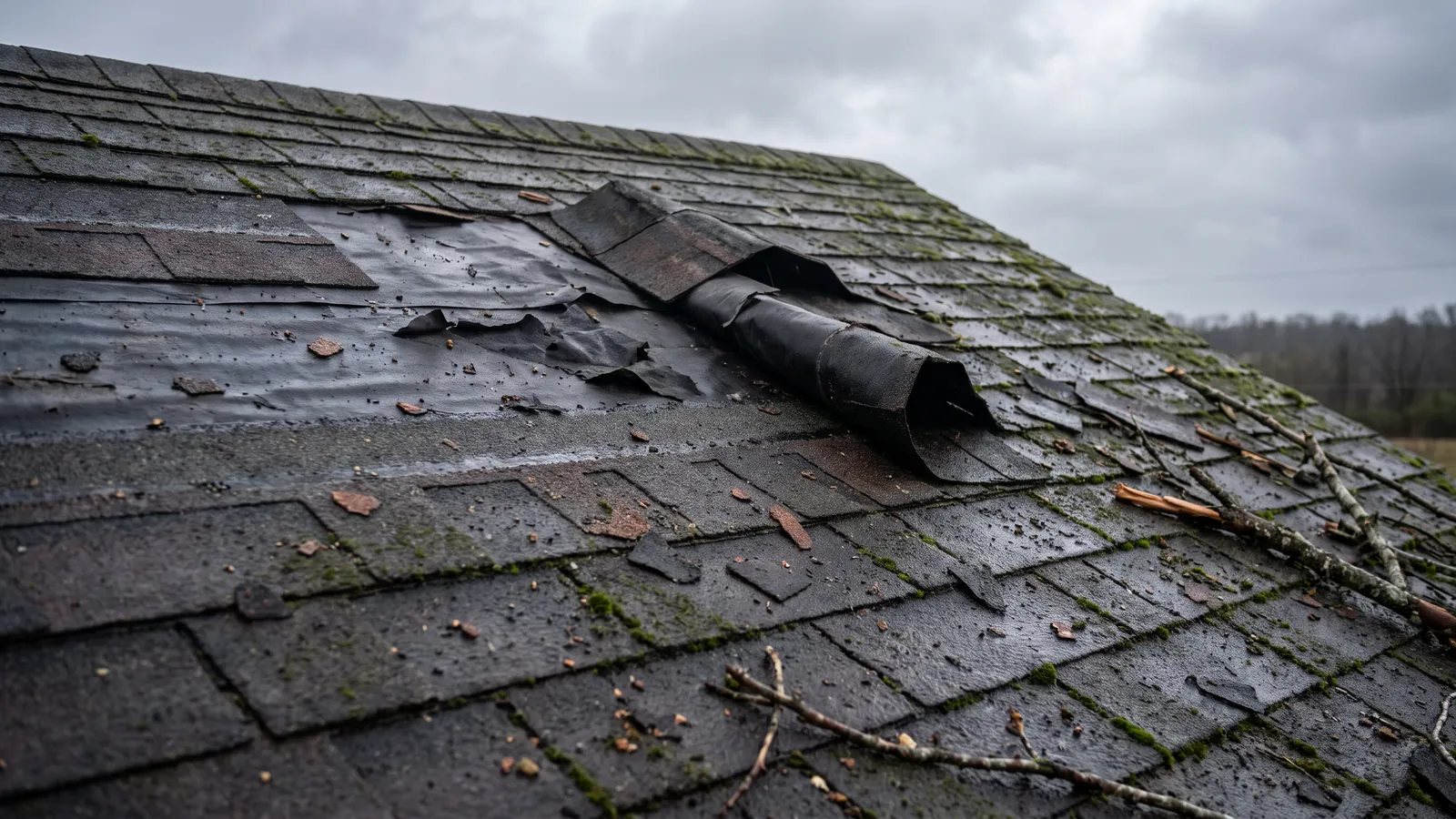
That Zeta figure is worth sitting with. In October 2020 the storm came ashore with 80 mph sustained winds and gusts reaching 103 mph here, causing something in the order of $650 million of damage across Mississippi. It was not a major hurricane. It still took a great many roofs across this town, which tells you something useful: the storms that damage roofs on this coast are mostly not the historic ones. They are the ordinary ones that arrive every few years.
The housing reflects two rebuilds rather than one. A median of 1995 means a substantial amount of stock predates Katrina and survived it, particularly further from the water, alongside post-2005 reconstruction nearer the bay. Owner-occupancy is high at 76.7 per cent. The Old Town around the harbour has genuine historic character and a correspondingly careful attitude to what goes on the roof. The US 90 bay bridge, destroyed by Katrina and rebuilt, is the daily reminder of the geography.
What we mostly do here is storm work and the inspections that follow it. After any system, the pattern is the same: a few roofs with obvious missing sections, and a far larger number with a zone of shingles whose seal strips broke and which are lying flat, holding nothing, waiting for the next blow. Finding those is a matter of physically lifting tabs, and it is the difference between a repair that holds and one that gets done again next autumn.
For houses nearer the bay, raised construction is common and brings the access and exposure considerations that come with it. And for anyone replacing, the FORTIFIED conversation is a serious one in Hancock County — the grant applies here and the sealed deck is exactly the detail that matters when a 103 mph gust is a thing that happens in an ordinary year.
What we do in Bay St. Louis
Storm work as the main business
Wind damage assessed, documented and repaired, with the broken seal strips found rather than just the obvious gaps.
Tabs lifted after every system
The shingles that lost their seal look perfect and hold nothing. They are found by hand, not from a drone image.
Two generations of housing
Pre-Katrina survivors inland and post-2005 rebuild nearer the water, each needing a different approach at tear-off.
Old Town handled carefully
Historic character taken into account on profile and colour rather than treated as an afterthought.
Raised-house access priced in
Pier construction near the bay affects time, safety and cost, and the quote reflects it.
FORTIFIED taken seriously here
Hancock County qualifies for the grant, and a sealed deck matters in a town where 103 mph gusts are an ordinary-year event.
Neighbourhoods and roads we cover
- Old Town and the streets around the harbour
- The beachfront along Beach Boulevard
- Neighbourhoods near the US 90 bay bridge
- The raised houses nearest the water
- Residential streets north of the railway
- Subdivisions toward the Waveland boundary
- The northern approaches along Highway 603
- Commercial buildings in the Old Town core
Roofing services in Bay St. Louis
- Roof repair, leak tracing, storm damage, emergency call-outs and tarping
- Full replacement, Class H shingle, metal roofing and FORTIFIED upgrades
- Inspections, insurance documentation and claim support
- Flat and low-slope, commercial, gutters and soffit and fascia
Questions from Bay St. Louis homeowners
Zeta was not even a major hurricane. How did it take so many roofs?
Because 103 mph gusts do not care about the category. Uplift at roof edges scales sharply with wind speed, and a roof that was marginal — four nails rather than six, worn seal strips, a lifted edge — fails at speeds well below a major hurricane. The storms that take roofs here are mostly the ordinary ones.
My roof looked fine after the last storm. Should I still have it checked?
Yes, and this is the single most useful thing on this page. The commonest post-storm condition is a zone of shingles whose self-seal strips broke but which are still lying flat. They look untouched from the ground and they are holding nothing. They leave in the next blow, and by then the storm they relate to is too old to claim against.
Does the FORTIFIED grant apply in Hancock County?
Yes. Hancock is one of the six counties named in the Strengthen Mississippi Homes programme, with the additional condition that the home sits in a jurisdiction enforcing a code meeting FORTIFIED. The grant runs to $10,000, selection is by lottery, and the guide sets out eligibility.
My house is in Old Town. Does that limit what I can put on?
It is worth checking with the city before ordering, since historic districts can have expectations about materials and appearance. Practically, standing-seam metal is often both the historically defensible choice and the better performer on this housing stock, which is a happy combination when it works out.
How long does storm repair take after a system comes through?
Honestly, longer than anyone wants. When a storm hits the whole coast, every roofer from Waveland to Pascagoula is booked at once. Get a tarp on, get documented, and get on a list. We prioritise by severity and give real dates rather than optimistic ones.
Nearby: Waveland · Diamondhead · Pass Christian · full service area