A commercial roof fails slowly and then all at once, usually over the stock
Commercial roofs are mostly low-slope membrane or metal over a large area with a lot of penetrations, and the thing that distinguishes them is consequence: when one leaks, it leaks onto inventory, equipment or a trading floor.
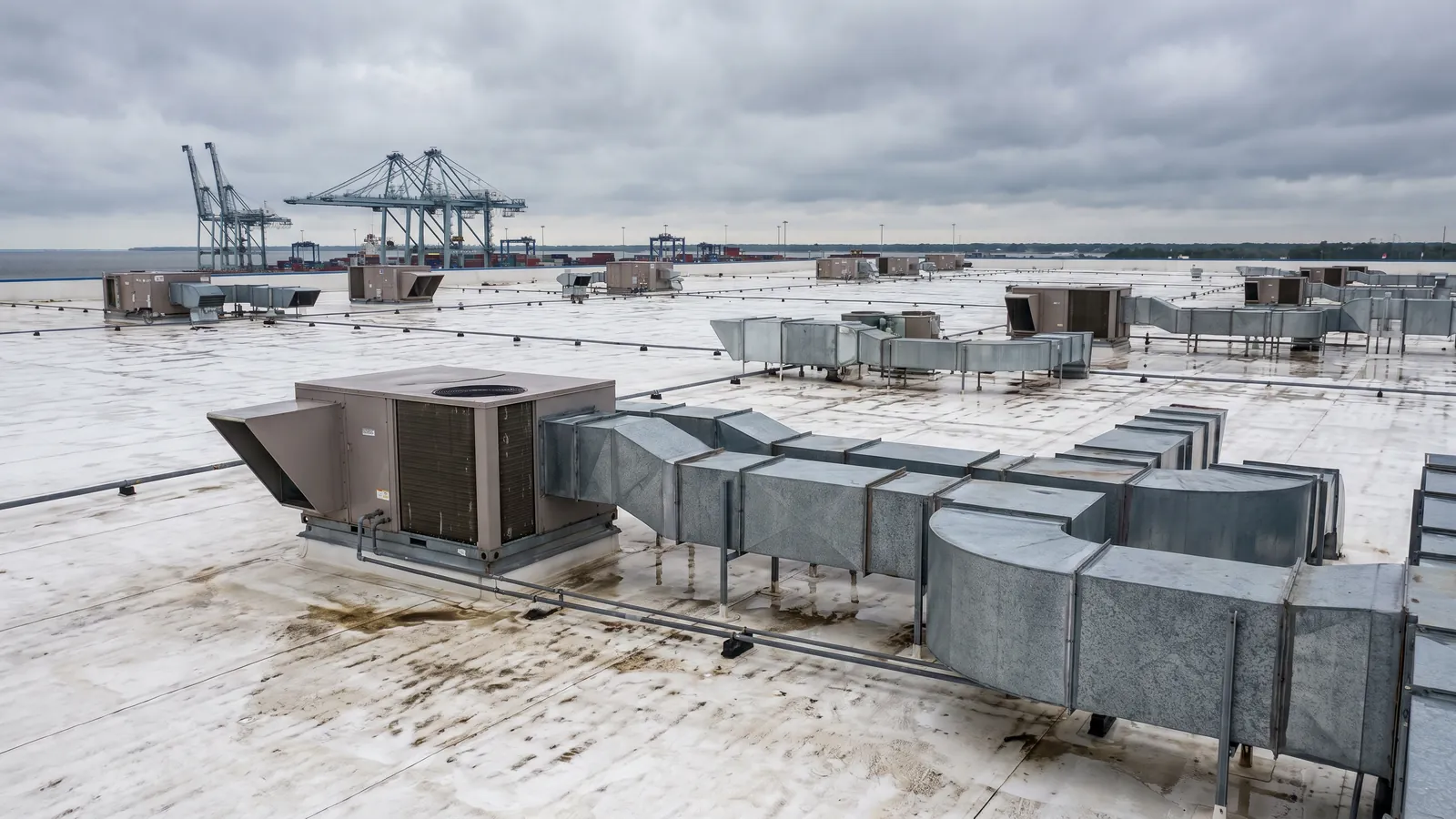
What we work on. Single-ply TPO and PVC membrane, which is most of the warehouse and retail stock along the coast. Modified bitumen on older buildings and smaller areas. Standing-seam and exposed-fastener metal on industrial buildings, workshops and a good deal of the newer construction. And the detailing that actually fails: curb flashings around rooftop units, pipe and conduit penetrations, parapet copings, expansion joints, drains and scuppers.
Where commercial roofs go wrong. Rarely in the open field. It is the penetrations and transitions — a rooftop air handling unit curb whose flashing was never properly terminated, a conduit added years later by someone who sealed around it rather than flashing it, a parapet coping joint that has opened with thermal movement. Then blocked drains, which on a large roof with a shallow fall creates ponding over a wide area very quickly. Then traffic damage, from service engineers walking a membrane that has no walkway pads where they work on the units.
Why planned inspection pays. On a commercial roof the cost of a leak is almost never the repair. It is the stock, the equipment, the trading time and the insurance excess. A twice-yearly inspection that clears the drains, checks every curb flashing and photographs the condition costs a fraction of one interior damage event, and it catches the curb flashing in month four rather than after it has soaked the insulation across two bays. For the buildings we look after on a schedule, that is the single biggest difference in annual spend.
Coastal specifics. Wind uplift ratings matter more here than almost anywhere — a large membrane roof is a large sail, and the perimeter and corner zones need enhanced fastening that a generic specification will not include. Salt air attacks fasteners and metal flashings, so stainless or properly coated fixings are not optional near the water. And anything on a building associated with the port, the Seabee base or a casino tends to have its own access, security and scheduling requirements, which we would rather know about before quoting than discover on the morning.
Scheduling. Most commercial work here happens outside trading hours, and we would rather plan it that way than lose a client a day of business. Night and weekend working is quoted up front with the premium stated, not added later.
What's included
Membrane and metal both
TPO, PVC and modified bitumen on low slope, standing seam and exposed fastener on industrial buildings.
Penetrations treated as the priority
Curbs, conduits, pipes and parapet copings, because that is where commercial roofs actually fail.
Drains cleared and checked
A blocked outlet on a shallow fall ponds a wide area fast, and clearing is often most of the repair.
Uplift zones specified properly
Enhanced perimeter and corner fastening, because a large membrane roof on this coast is a large sail.
Planned inspection programmes
Twice yearly with a written report per building, which costs a fraction of one interior damage event.
Worked around trading hours
Night and weekend scheduling agreed in advance with the premium stated up front.
Commercial roofing prices on the Mississippi coast
| Job | Typical price | Notes |
|---|---|---|
| Commercial inspection and report | $240 – $620 | Per building, written report included |
| Planned maintenance, per visit | $280 – $780 | Twice yearly; drains, curbs, seams, report |
| Membrane seam or patch repair | $480 – $1,600 | By extent and access |
| Curb flashing repair at a rooftop unit | $620 – $1,800 | Per unit |
| Drain or scupper repair | $380 – $920 | Per outlet |
| TPO replacement, per square | $650 – $1,200 | Insulation specification dependent |
| Standing seam metal, per square | $900 – $1,600 | 26 gauge or heavier |
| Out-of-hours working | Add 20 – 40% | Quoted up front, agreed in advance |
These are 2026 ranges for Harrison, Hancock and Jackson counties, to give you something to plan around. The real figure comes after someone has been on the roof, with the scope, the permit and the inspections itemised; written estimates hold for 30 days.
Recent work
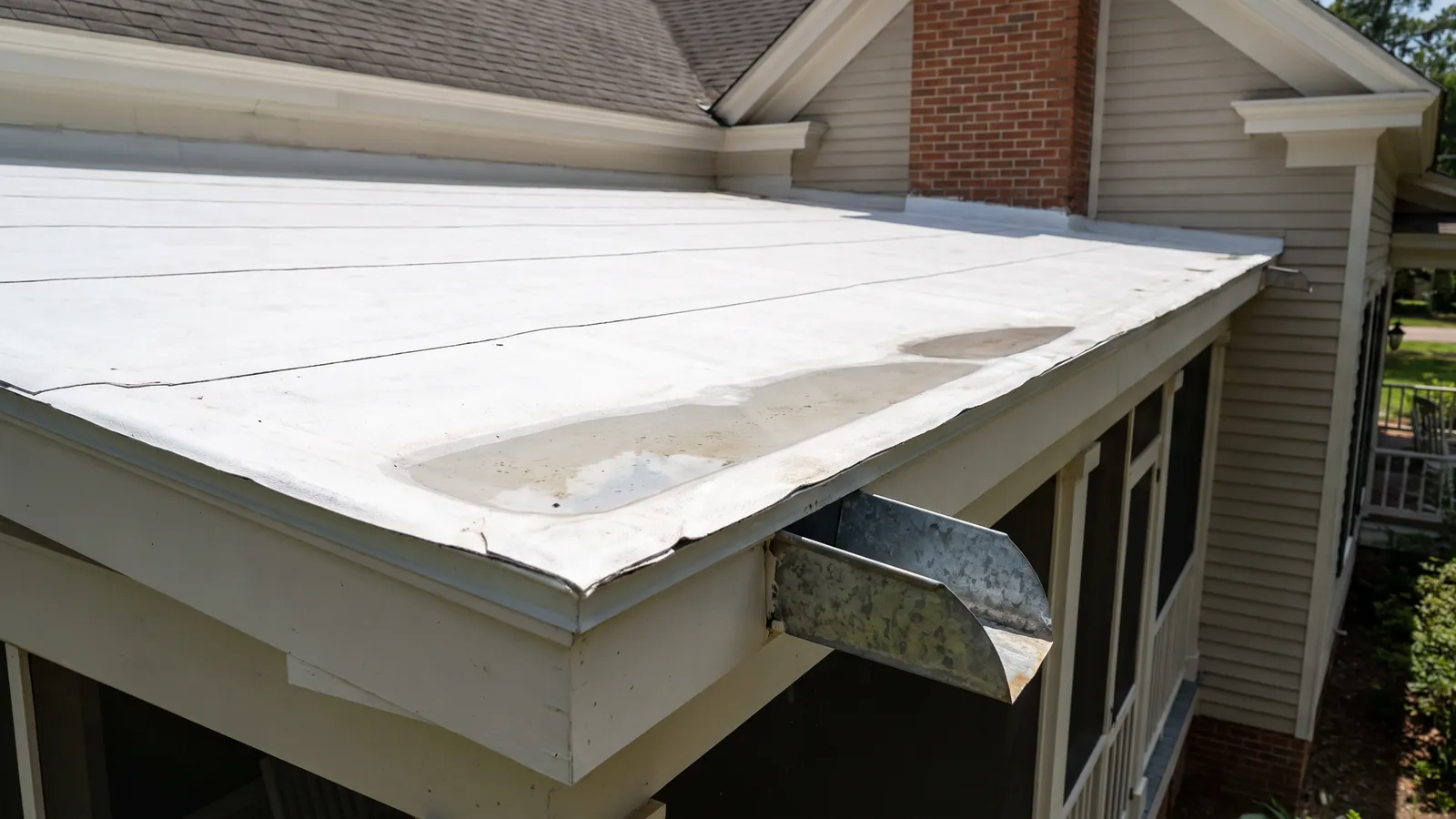
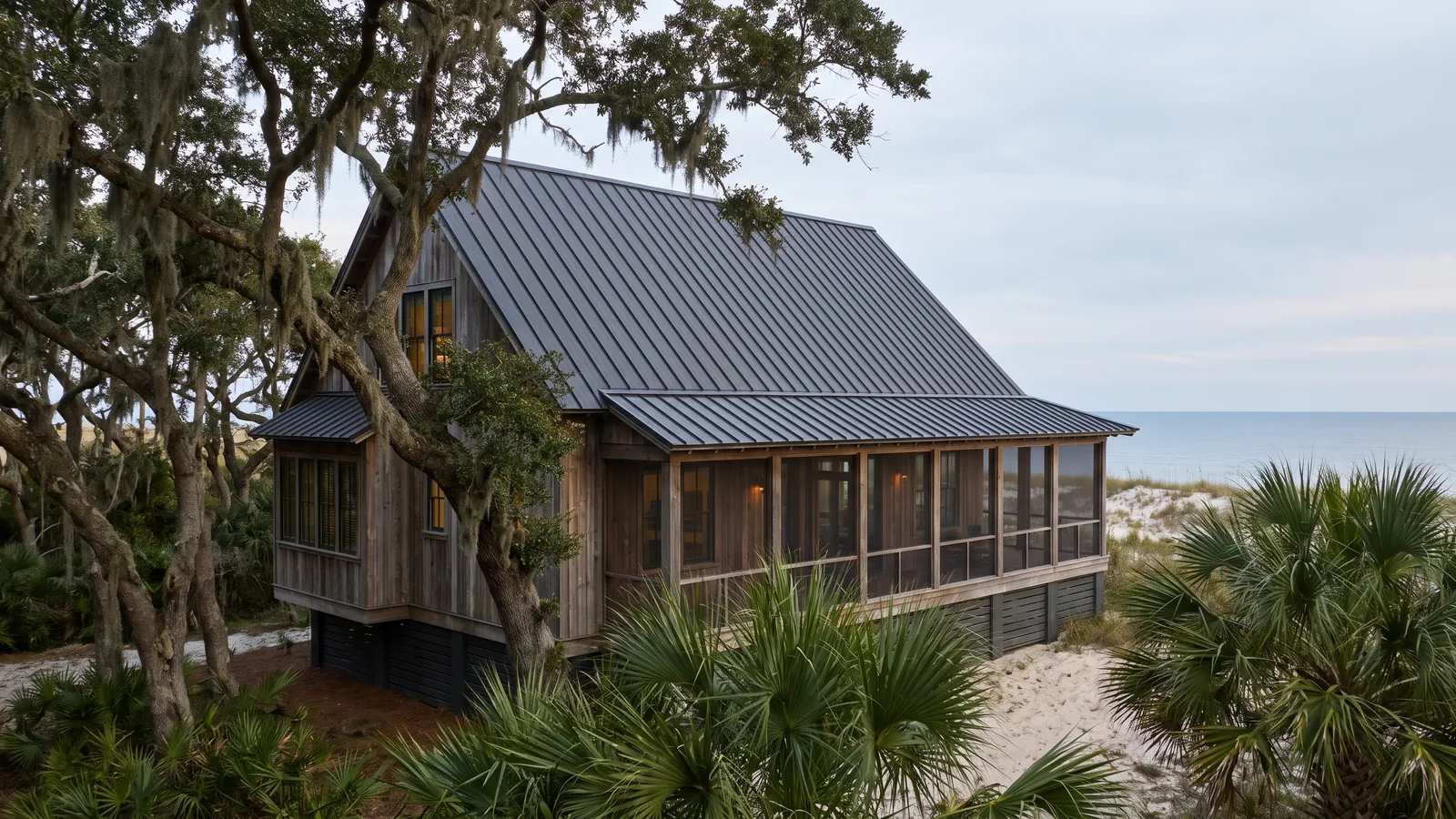
Questions we get about commercial roofing
How fast can you respond to a commercial leak?
Same day for anything coming into a trading or storage area. Tell us the building type, roughly where the water is appearing inside and whether stock is under it when you ring, because that decides what goes on the truck and how the queue is ordered.
Can you work outside our opening hours?
Yes, and for most commercial clients that is the sensible arrangement. Night and weekend working is scheduled in advance with the premium stated in the quote — it is almost always cheaper than losing trading time, and for food and retail premises it is usually the only workable option.
Is a maintenance programme actually worth it?
On a commercial roof, clearly. The repair is rarely the expensive part of a leak — the stock, equipment, downtime and insurance excess are. Two inspections a year that clear the drains and check every curb catch problems at the cheap end. For the buildings we look after on schedule it is the biggest single difference in annual spend.
Can a roof be repaired while the building stays open?
Usually, with planning. Membrane work is relatively quiet and self-contained; a tear-off is not. We sequence the work by section, protect the interior beneath, and agree in advance which areas are affected on which days. Anything genuinely disruptive gets scheduled out of hours.
Do you work on port and base contractor buildings?
Yes. Those sites generally have their own access control, badging and scheduling requirements, and it is far better to establish those at quoting stage than on the first morning. Tell us at the outset and the programme is built around them.
What causes most commercial roof leaks?
Penetrations and transitions, not the open membrane. Rooftop unit curbs whose flashing was never terminated properly, conduits added later and sealed rather than flashed, parapet coping joints opened by thermal movement, and blocked drains. Service engineers walking a membrane with no walkway pads comes a close fifth.