Class H, six nails, one layer. The spec here is not a preference.
Asphalt shingles are still what most of this coast puts back on, and for good reason: they are economical, they repair easily, and fastened to the current standard they perform well. The standard is the part that matters.
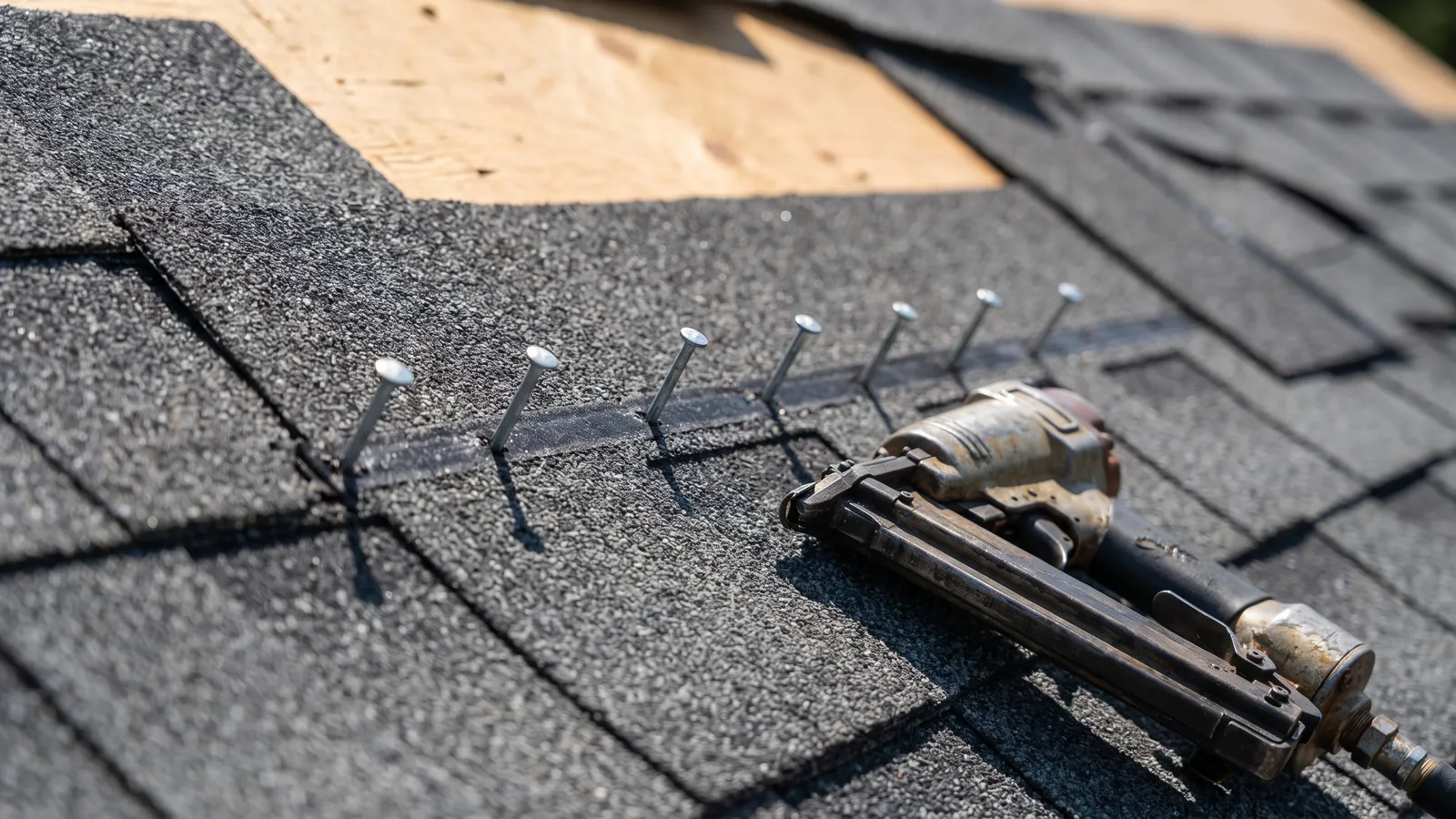
What the code actually asks for. Gulfport's roofing requirements, built on the 2018 code, are specific. All of the city is a high-wind area with a residential design speed of 160 mph on a three-second gust. Asphalt shingles must be tested to ASTM D7158 Class H, which is the highest wind classification in that standard. Each shingle takes at least six nails rather than the four that a manufacturer's standard instructions often specify. Only one layer is permitted. And the decking is nailed at four inches on the edges and six inches through the field. Ocean Springs works to the same 160 mph under the 2024 code.
Those are not abstract numbers. The six-nail pattern is the single biggest practical difference between a roof that keeps its shingles in a 100 mph gust and one that does not, because it puts two additional fasteners through the common bond area where the courses overlap. It takes a crew longer and uses more nails, and it is exactly where a cheap quote saves money in a way you cannot see from the ground.
Architectural rather than three-tab. Three-tab shingles are thinner, lighter, have a lower wind rating and look flat. Architectural — also called dimensional or laminate — shingles are built from two bonded layers, weigh considerably more per square, carry higher wind ratings and are what Class H products overwhelmingly are. On this coast the price difference is modest and the performance difference is not. We fit architectural as standard and will explain three-tab if you ask, mostly to explain why we are not recommending it.
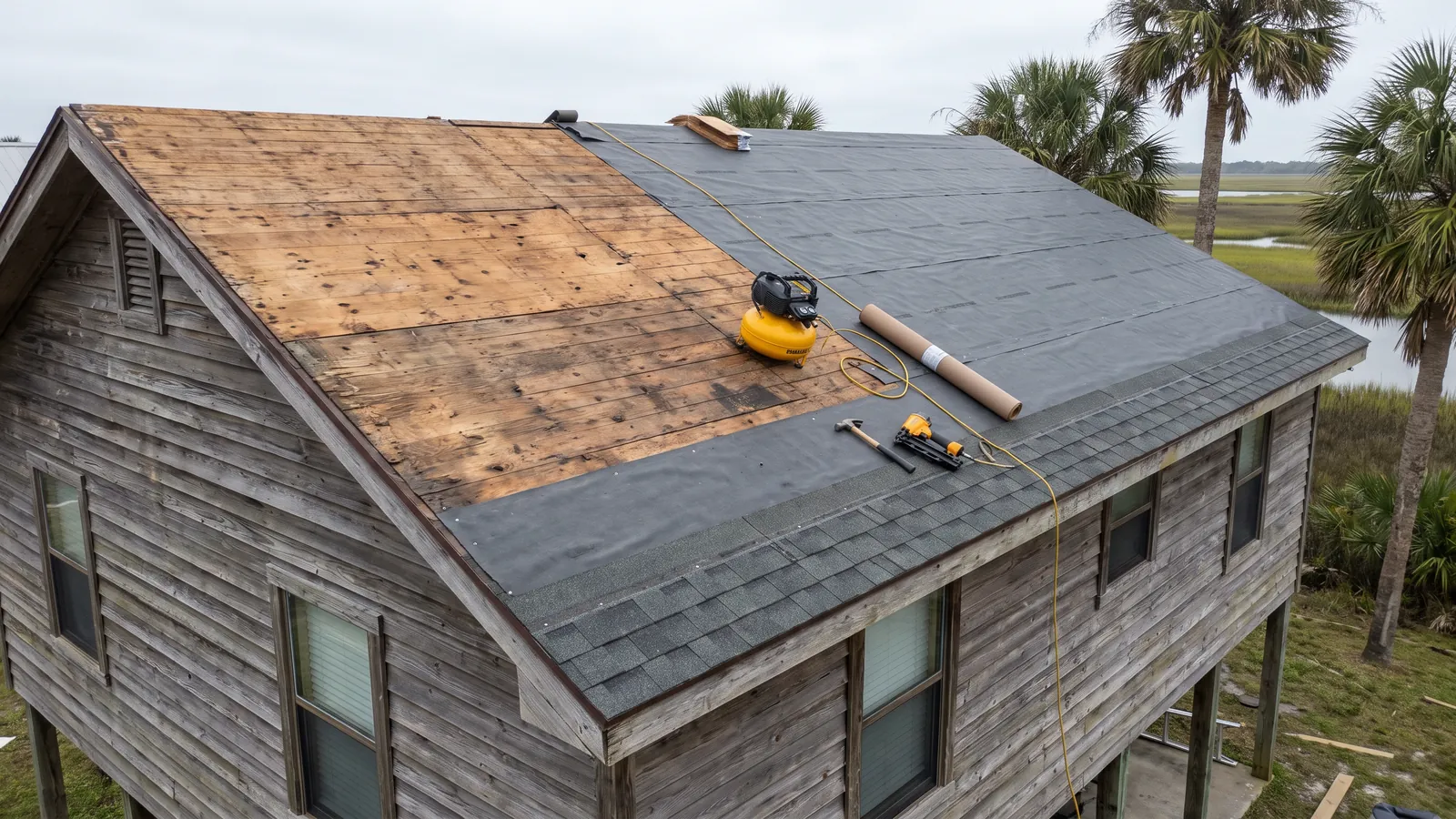
What goes under them. Synthetic underlayment rather than felt, because felt tears in wind during installation and holds water if it gets wet. Ice-and-water membrane in the valleys, around every penetration, and at the eaves, which is the detail that saves you when wind drives rain uphill under the shingles. New drip edge at eaves and rakes, which is both code and the thing that stops the edge courses lifting. Starter strip along the eaves and rakes, properly adhered, rather than cut-up shingles.
And ventilation. A roof space in Mississippi reaches temperatures that cook shingles from underneath and take years off the roof. Ridge venting with adequate soffit intake is worth doing while the roof is open, and the cost of retrofitting it later is the whole job again.
What's included
Class H architectural shingles
ASTM D7158 Class H as the city requires, in architectural weight rather than three-tab.
Six nails in every shingle
Not the four a manufacturer's basic instruction allows. This is the difference in a 100 mph gust.
Synthetic underlayment
Rather than felt, which tears in wind during installation and holds water when it gets wet.
Ice-and-water where it counts
Valleys, every penetration and the eaves, which is where wind drives rain uphill under the courses.
New drip edge and starter
Proper starter strip at eaves and rakes, adhered, rather than cut shingles — the edges are where uplift begins.
Ventilation sorted while open
Ridge venting with adequate intake, because retrofitting it later means doing the roof again.
Shingle roof replacement prices on the Mississippi coast
| Job | Typical price | Notes |
|---|---|---|
| Architectural shingle, single storey | $12,500 – $18,000 | Tear-off, underlayment, drip edge, Class H shingles |
| Architectural shingle, two storey | $16,000 – $26,000 | Access and pitch dependent |
| Complex roof, many valleys and dormers | Add 10 – 25% | More cutting, more flashing, more time |
| Upgrade to a heavier Class H product | Add $900 – $2,600 | Higher weight and longer warranty lines |
| Ice-and-water across the full deck | Add $1,400 – $3,200 | Beyond the valleys and penetrations |
| Ridge ventilation | $620 – $1,400 | Where the design supports it |
| Decking replacement, per sheet | $160 – $290 | Quoted in advance |
| FORTIFIED upgrade at the same time | Add $1,200 – $3,400 | See FORTIFIED |
These are 2026 ranges for Harrison, Hancock and Jackson counties, to give you something to plan around. The real figure comes after someone has been on the roof, with the scope, the permit and the inspections itemised; written estimates hold for 30 days.
Recent work
Questions we get about shingle roof replacement
What does Class H actually mean?
It is the highest wind classification under ASTM D7158, the standard that tests shingle uplift resistance. Gulfport requires it because the whole city is designed to a 160 mph three-second gust. Products are labelled with it; if a quote does not say Class H anywhere, ask what is being fitted and why.
Why six nails instead of four?
Because the city requires it and because it works. Two extra fasteners per shingle land in the common bond area where courses overlap, which is where uplift pulls hardest. It costs a crew time and nails, which is precisely why it is a corner that gets cut on cheap quotes — and it is invisible from the ground once the roof is on.
How long will architectural shingles last on the coast?
Realistically twenty to twenty-five years here, against the thirty or more a manufacturer's warranty headline suggests. Heat, UV and salt air all shorten it, and an unventilated roof space shortens it considerably further. Ventilation is the cheapest way to move your roof toward the top of that range.
Can I get a longer warranty?
Manufacturers offer extended warranties, usually conditional on using a full system of their components and sometimes on the installer holding their certification. Read what is actually covered — most are pro-rated on materials and exclude labour after a few years, which makes the headline number less useful than it looks.
Is metal worth the extra over shingle?
It depends on how long you are staying. Standing-seam metal costs roughly twice as much and lasts roughly twice as long, so over forty years it is competitive and over ten it is not. It also handles wind and salt better. The comparison guide works through it properly.
Do shingle colours fade?
Yes, noticeably in this sun, and unevenly across slopes depending on exposure. That is worth knowing if you are planning a partial replacement now and the rest later — the two will not match. It is also why a repair to a ten-year-old roof is close rather than invisible.